Layers of meaning in photography
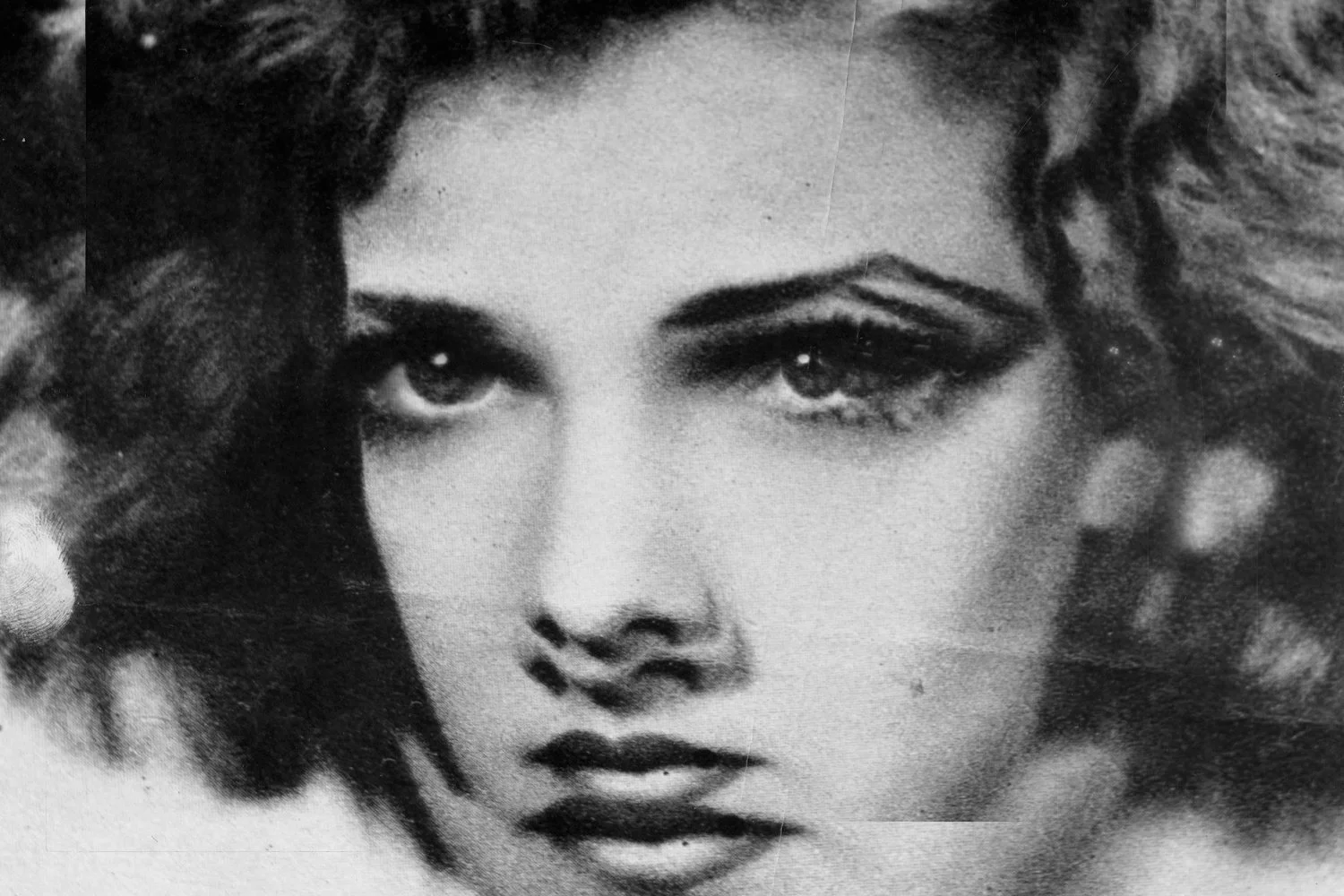
In photography, as well as in in any other visual or creative act, there often times tends to be layers of meaning in the artwork. A photo of a person might not be merely a portrait, even though the person is seemingly the subject. Depending on the intentions, and complexes, of the photographer, what they are trying to communicate, consciously or unconsciously, might actually reveal another, less visible layer containing the underlying meaning.
If that is not the case, you’re most likely looking at a passport photo or perhaps a commercial photo in a product catalogue. But if there is any artistic integrity or attempts to express something, the image has a strong tendency to go beyond the surface. How ever, photographs usually resonates more deeply than we can articulate, which makes it difficult to see beyond the surface.
Street photography as case study
I think street photography is a fantastic example of the layering. If you would to ask someone, who is even remotely informed about photography, how they would describe street photography as a genre, you could perhaps stumble upon a very common sentiment, that states street photography being almost like nature photography, but instead of photographing wildlife, you’re photographing people.
It is easy to agree with this sentiment but perhaps it doesn’t quite stop there and maybe there is something to add.
Photographer’s perspective and intentions
My thinking is that whenever I take a photo of a person on the street, I’m not actually interested about the person as such. The photo might seemingly be about him or her, but when I really think about it, I see them more as symbols for something behind the image. They represent, stand for, or depict something. They carry a message. And even though the person might be the central subject, they are still just one component of the entire image, not the whole image. How the subject is framed, juxtaposed and viewed, determines or at least tries to communite the deeper meaning.
Ok, i’m being really vague here, so let’s be a bit more concrete. The hidden layer, the so called true meaning of the photograph might be, for example, beauty or timelesness. I’m picking these as examples, because they are some of the central themes in my own street photography. The theme could be anything, depending on the photographers agenda and worldview, id est, the thing that they’re trying to convey.
How to see the invisible?
The hidden layers of meaning can be completely unknown to the photograper. Sometimes the photographer knows the images only emotionally before intellectually. Some photographers feel a certain need or drive, but the motive behind them might never be realised. Usually though it becomes clearer, or finally revealed completely, when the body of work surrounding the topic becomes visible through the photographs.
It’s worth bearing in mind that other people might be able to pick up the visual cues before the photographer, and detect what they are up to, while the photographer is still only trying to articulate the message. So be careful, if you share your work, it may reveal more than you realise. Artwork always tells something about the mind that it emerged from.
When a body of work (not just a single image, but loads of photos) takes shape, it can be observed and analysed based on the patterns and motifs that the series of images show. A single image can convey a message or hint at it, but it cannot form a pattern yet.
To fully tap into the internal drives, I think it’s important to shoot reactively and not to rationalise it too much when the subject emerges. It doesn’t need to make sense immediately. If you sense something, just shoot and think later.
If I may use my own street photography as an example again, I mentioned beauty and timelesness as themes and motifs. The next question is: why are these things important or worth photographing? Did I even realise it when I was taking those photos? Was I even remotely aware of my own motives?
My street photography endeavours took place roughly during 2016-2020. The momentum stopped when I finished processing the thing that I what I was trying to communicate with it. During the project, I wasn’t fully aware why I was doing it. I just felt the need for it. It was a way of processing something. What the something was, became apparent only afterwards, when I laid out all the photographs side by side and looked at them as a body of work. Having a hundred photos side by side clearly shows what are the repeating patterns, making it easier to ask what so special about them and what the unconscious processes actually were. Artwork illuminates and makes the unconscious conscious.
I realised, that I was interested in beauty, because I didn’t see that in my own environment. I was interested in timelessness, because I didn’t feel at home in the age that we’re living. Of course these values are entwined because I see much beauty in timelessness and vice versa. Those were my thought patterns and intentions. They are the stuff of the third layer and much harder to detect without a deeper analysis.
Those thought patterns determined how the project was executed and stylized. In my minds eyes, timeless aesthetics equated to 35mm film, home developing, classical compositions, classical settings that determind the shooting locations and the types of people I looked for.
It even inspired me to use certain kind of cameras. It needed to be almost ritualistic. A Canon EOS film camera or anything else with an exposure automation or a power winder was out of the question. The process needed to match the aesthetics. No plastic, no batteries, but metal and leatherette. Manual focus, manual film advance, sunny 16 rule and walking shoes — heck yeah! 👊
I was essentially trying to replicate a style that was ideal for me, not necessarily to push the boundaries of photography or innovate, but to live out history and carry on the tradition of classic street photography.
Viewer’s perspective and the shifting layers
While the image itself remains fixed to the 1/125 second perioid of time, when it was taken, the layers of meaning behind it do not, as they continue to live and shift throughout time. Today’s snapshot might be tomorrows treasure.
For me as the creator, the true meaning might stem from the fascination for beauty, timelesness or whatever, but there is also the receiving end — the viewer.
The photograph can be interpretted almost in infinite ways, even though some patterns and motifs are perhaphs more noticeable and easier to agree upon. For example, no matter how you’d interpret Henry Cartier-Bresson, it is undeniable that he clearly communicated the human condition and yada, yada, yada. I suppose there is always a certain amount of common ground. Whoever disagrees with the human condition thing, and sees secretary porn instead, might need a wellness check.
How ever, what you’re experiencing as the viewer, may be less about what the images show and more about what they constellate in your mind, shaping the meaning it has for you, no matter what the photographer intended. There might be a strong emotional and symbolic level. It may be worth investigating what feeling emerges before words and what symbolic structures as visual components are present.
It is up to the viewer whether they can detect beauty and timelesness and it would be somehwat futile to demand that from the viewer. The strenght of the photograph is that the layers of meaning are subjective and they can shift as the time goes on. The meaning it has now, might be something completely else altogether in the future.
A picture of a person might be a straight forward portrait now, but in the future it might be a longing memory of a long gone loved one — perhaps the only remaining thing.
A photograph is a moment frozen in time and the deepest layers might reveal themselves only when the time goes by. In that sense, a good photograph ages like wine. A photograph might even be completely meaningless now, but the further away it travels into the future, the more it shows. The more it distances itself from the present, the more apparent it becomes that what it shows happened once, only existed for a moment and will never happen again.
Thank you very much for reading, and I’d also quickly like to point out, that similarly to those movie ending credits stating that animals were not harmed during the production, I’d like to point out that no artificial intelligence were used to write this article and it has been completely written by a real human being, using two hands and a keyboard. (No animals harmed either.)